
Wedding Invitation Details Card: What to Include (2026)
Write a details card for reception, accommodation, transport, dress and online replies, with a complete layout and useful wording examples.
Last updated October 2026
Contents10
- Wedding invitation details card: choose its job
- Put reception information first when the location changes
- Accommodation wording
- Transport, parking and access
- Dress code wording that guests can use
- Wedding website and online RSVP
- A complete details-card layout
- What to leave off a wedding invitation details card
- Proof the card and the whole suite
- Verdict on the information insert
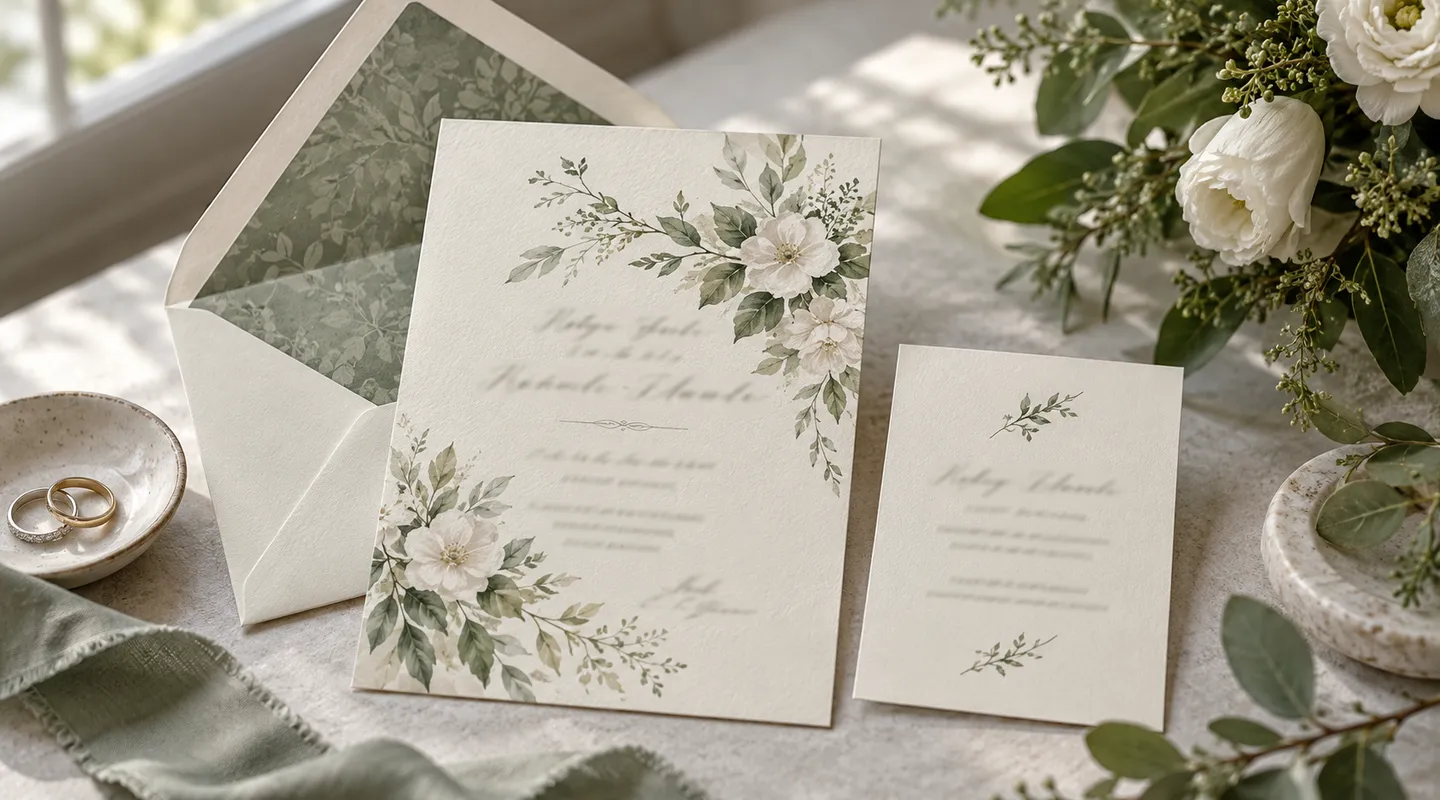
A wedding invitation details card holds the extra details guests need beyond the ceremony invitation. Use it for a separate reception, accommodation, transport, dress code and wedding website. Give each item a short label so guests can scan it. Keep the main card focused on the invitation to attend.
The short answer: include only the details that help guests arrive, dress and plan their stay. A details card can name the reception venue, hotel booking deadline, shuttle plan and website. Keep gift requests off it, and give smaller events their own invitations. If you use online RSVPs, print a clear reply instruction and deadline rather than an unlabeled website link.
Wedding invitation details card: choose its job
A details card is an enclosure that carries practical details. Some couples call it a details card or enclosure card. It's useful when the main invitation would become crowded with reception and travel instructions.
Emily Post's invitation guidance describes enclosures as part of the invitation suite and keeps the main invitation's message clear. You can use one combined card if the details are short, or separate reception and travel cards if each needs more room.
Start by listing what guests can't work out from the main card. A single venue with easy parking may need very little. A separate church, reception venue and shuttle plan needs more explanation.
Use the wedding invitation planning guide to choose the full suite. If you're unsure whether an item belongs on the main card, compare it with the required invitation elements.
Put reception information first when the location changes
Give the reception venue name, street address and start time if guests leave the ceremony venue. Use a heading such as “Reception.” A label helps guests distinguish the second location from the ceremony address.
Example:
Reception
Please join us for dinner and dancing
Cedar House, 40 Meadow Lane
Asheville, North Carolina
Reception begins at 5:00 p.m.
If there's a break between events, give the reception time rather than only “to follow.” Guests can then decide what to do during the gap. Put any confirmed shuttle departure time directly below the reception block.
When the reception guest list is smaller than the ceremony list, use a separate reception insert for invited households. Don't print that dinner invitation on a general details card sent to everyone. The ceremony wording guide explains that split.
Accommodation wording
Print the hotel name, a booking route and the actual cutoff date from the hotel agreement. Say whether guests should use a code or a specific link. Don't make a room block sound like a room reservation already made for each guest.
Example:
Accommodation
A room block is available at Maple Hotel.
Please book using the Rivera–Brooks link on our website by May 10.
Guests arrange their own accommodation.
Replace the fictional hotel and date with confirmed details. If the hotel link is long, put the short wedding website address on the card instead. Test the route as a guest before printing it.
Make the hotel cutoff distinct from the wedding RSVP deadline. A guest can book a room before replying to the invitation, and a wedding acceptance doesn't reserve a room. Those are two separate tasks that need two labels.
Transport, parking and access
Use short instructions with a specific place and time. “Shuttle available” leaves guests unsure where to board or whether they need to reserve a seat. If the plan is still changing, give the website route where the final details will appear.
Example:
Transport
A shuttle departs Maple Hotel for the ceremony at 1:15 p.m.
Return trips from the reception begin at 9:30 p.m.
Please request a shuttle seat when you RSVP.
Only promise those trips after confirming them with the transport provider. Check whether the shuttle can meet guests' access needs. Add a contact route for private questions rather than asking guests to put sensitive details on a public response page.
For parking, name the lot or entrance if the venue has several. A simple line such as “Use the Orchard Road entrance; guest parking is beside the garden” is helpful when it's accurate. Avoid lengthy turn-by-turn directions that will become hard to read on a small card.
Dress code wording that guests can use
State the dress code directly: “Black tie,” “Formal attire,” or “Cocktail attire.” If the venue creates a practical need, add a separate short explanation. For example: “The ceremony is on grass; shoes suitable for the lawn are welcome.”
Don't make guests decode a theme phrase to work out what to wear. A phrase such as “garden celebration” describes the mood but may not tell them whether a suit or formal gown is expected. Pair the mood with a clear dress instruction if one matters.
Keep weather guidance practical. “The ceremony is outdoors; please bring a light layer” can help guests prepare. Check the indoor backup plan separately and share any last-minute switch directly if it affects arrival.
For formal main-card wording, see traditional wedding invitation wording. The details card can use plain short sentences even when the invitation spells out dates and times.
Wedding website and online RSVP
Print a short website address with a description of what guests will find there. “Travel details and updates: [website]” is clearer than a bare URL. If the website also collects replies, say so explicitly.
Example:
Please reply by May 22 at our wedding website: [website address]
You'll also find travel details, parking information and weekend updates there.
A QR code can sit beside the printed address. Keep a typed address too, so guests have a second way to reach the page. Test the code on a printed draft at the size you intend to order.
Use the response-card guide to choose between paper and online replies. A details card can carry the RSVP instruction, but it still needs a reply-by date and a route that works for every invited household.
A complete details-card layout
This fictional example keeps the main card separate and groups the guest instructions:
Wedding details
Reception
Dinner and dancing at Cedar House
40 Meadow Lane, Asheville, North Carolina
Reception begins at 5:00 p.m.
Accommodation
Maple Hotel room-block booking closes May 10.
Booking instructions are on our website.
Dress
Cocktail attire. The ceremony takes place on grass.
Reply and updates
Please reply by May 22 at [website address].
Replace the bracketed website before printing. If the card feels dense at its actual size, shorten the accommodation line and move the booking steps online. A readable card is more useful than one containing every piece of details.
Check the reception time against the venue schedule. Compare the hotel date with the room-block contract. Match the website reply deadline to the guest tracker.
What to leave off a wedding invitation details card
Traditional wedding invitation etiquette keeps registry and gift requests out of the invitation suite, as Emily Post explains. Use the website for gift details rather than turning the details card into a shopping instruction.
Keep private household limits out of a general printed card. An envelope's invited names and a household-specific reply list are better ways to identify the guest group. Speak directly with a household if children or a plus-one need clarification.
Give rehearsal dinner guests their own dinner insert. Don't put a private dinner on a card every wedding guest receives. Keep unconfirmed schedules, draft transport times and long personal stories off the card too.
Proof the card and the whole suite
Read the card beside the main invitation and response instructions. Remove conflicting dates, duplicated venue labels and unlabeled times. Ask someone who is not planning the wedding to explain the route they would take through the day.
Print a draft at the final size. Check small text and QR-code scanning in normal light. The card design guide covers paper and layout choices that affect legibility.
Add the card to a complete envelope before checking postage. USPS's letter instructions explain why weight, thickness and unusual envelopes matter. A heavier version with a dinner insert may need a separate postage check.
For the next invitation decision, see Wedding Invitation Etiquette: Guests, Replies and Timing.
Verdict on the information insert
A wedding invitation details card should answer the practical questions that don't fit on the main invitation. Label reception, accommodation, transport, dress and reply details clearly. Keep private events separate and move long instructions online, so the printed card remains easy to use.
Questions people also ask
What goes on a wedding invitation information card?
Include practical reception, accommodation, transport, dress and website information when guests need it. Label each section and keep the text short. Move long booking steps online, and check that every printed deadline and time agrees with the confirmed plans.
Can a details card include the RSVP instruction?
Yes. Print the reply-by date and a clear website or contact route. A bare website address does not tell guests to reply there. Test the route and provide another reply method for guests who cannot use the online form.
Should the details card list the rehearsal dinner?
Use a separate dinner invitation for the smaller dinner guest list. A general card sent to all wedding guests can accidentally imply they are invited to every listed event. Keep private inserts and website event views matched to the invited household.
Should registry information go on the details card?
Traditional wedding etiquette keeps gift information out of the invitation suite. Use the wedding website or share the registry when asked. Keep the details card focused on arriving, dressing, booking accommodation and replying to the actual invitation.