Seating Chart Wedding: How to Plan Yours
Build a wedding seating chart in the right order — table layout, then names — with practical approaches for boards, cards and displays.
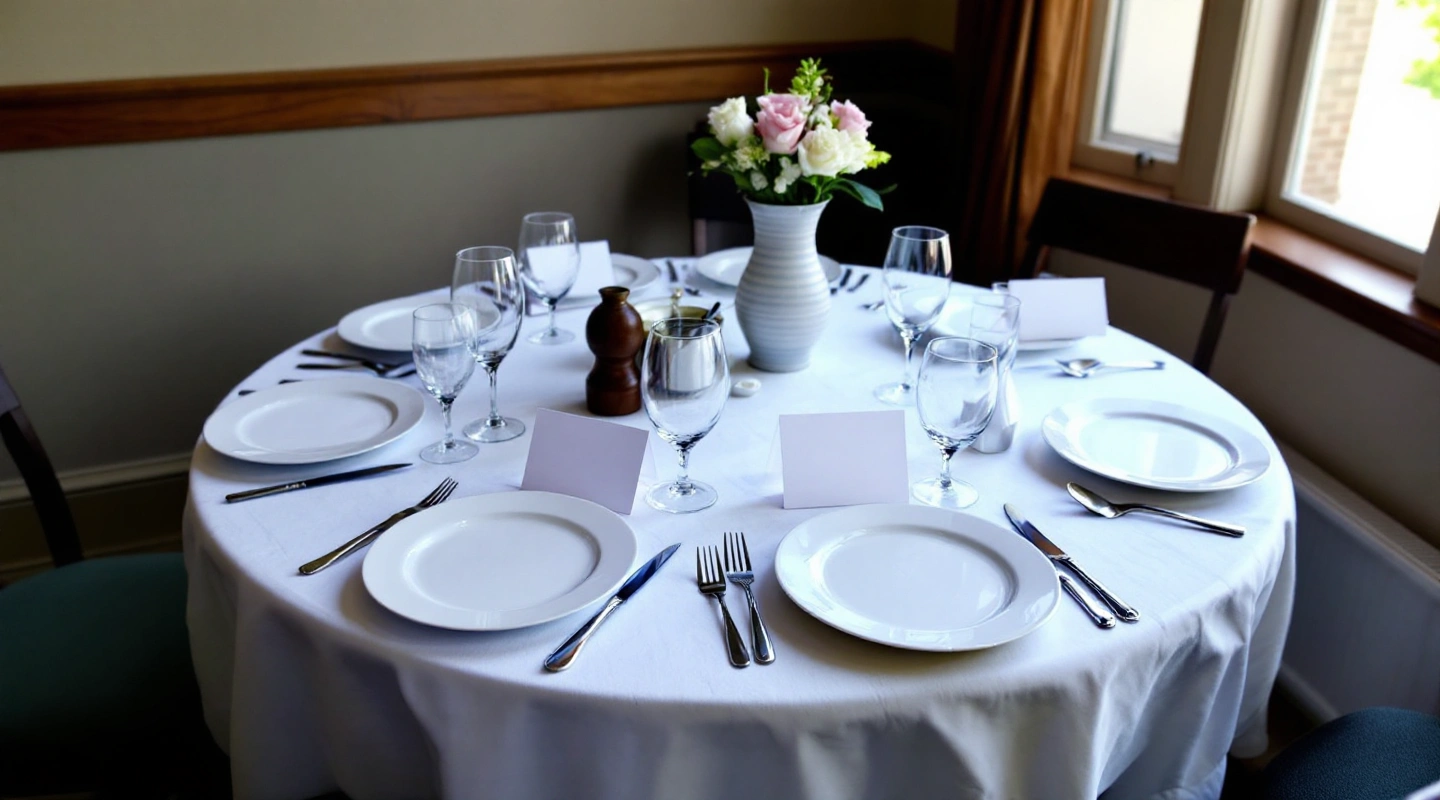
Contents11
- Plan the layout before the names
- Group guests by relationship and comfort, not just family lines
- Wait for your final headcount
- Choose a display format once names are set
- Keep it flexible until the day is close
- A worked example: planning a mid-size guest list
- Table shapes and how they change the plan
- What to do if your guest count changes after the chart is made
- Common mistakes and how to avoid them
- Coordinating the chart with your caterer and rentals
- When a seating chart isn't necessary
A wedding seating chart is really two separate decisions: how tables are laid out, and who sits where. Doing them in that order — layout first, names second — saves you from redoing work when your final guest count settles.
The short answer: confirm your venue's table shapes and counts, group guests by relationship and comfort, assign tables only after your RSVP deadline, then choose a display format last.
Plan the layout before the names
Ask your venue for the table shapes, sizes and maximum seats per table before you plan anything else. A floor plan drawn to scale — even roughly, on paper — makes it much easier to see which tables are near the dance floor, the bar, or the exits, and to place guests accordingly.
Group guests by relationship and comfort, not just family lines
The most common seating mistake is grouping strictly by "bride's side" and "groom's side" or by family branch, without considering who actually gets along or has something in common. Mix guests who share an interest, an age range, or a existing friendship, and keep any known tension apart. A single "miscellaneous" table for guests who don't fit an obvious group works better than scattering them awkwardly.
Wait for your final headcount
Assigning specific names to specific tables before your RSVP deadline almost always means redoing the work. Use your wedding guest list to track responses, and don't finalize table assignments until non-responses are followed up and the count is as close to final as it will get.
Choose a display format once names are set
Once tables are assigned, decide how guests find their seat: an alphabetical list by entrance, per-table place cards, or a larger display board or mirror. Each has different production needs — a place-card approach needs printed or handwritten cards per person, while a board or mirror needs the full list laid out legibly at a distance. This site covers several specific formats if you want more detail:
- How to make a wedding seating chart — the step-by-step process
- Seating chart ideas — layout and grouping approaches
- Seating chart board and seating chart sign — physical display formats
Keep it flexible until the day is close
Guest lists shift, tables get added or removed, and last-minute changes happen. Keep your seating plan in an editable format (spreadsheet, printed draft with pencil, or your own document) until the week of the wedding, and don't commit it to a final printed display until then.
A worked example: planning a mid-size guest list
Consider a couple planning for roughly 120 guests across twelve tables, in a single reception room with a dance floor at one end and a bar along the opposite wall. Their venue confirms six round tables of ten and two rectangular tables that seat twelve if pushed close together, so the final layout uses a mix rather than one uniform shape.
They start with the floor plan: tables near the dance floor go to guests likely to be up dancing early — the wedding party's friends, younger cousins, coworkers who know each other well. Tables near the bar but away from the speakers go to older relatives who want to talk without shouting. The two rectangular tables, which seat more people but make cross-table conversation harder, go to two large extended-family groups who already know each other well and don't need the whole table to mingle.
Only once that layout is sketched do they move to names. They wait until two weeks after the RSVP deadline, after chasing down eleven households who hadn't responded, before assigning specific names to specific tables. That gap between "layout is set" and "names are set" is where most of the actual decision-making happens — the floor plan itself takes an afternoon, but sorting 120 people into the right groups takes several sessions spread across a couple of weeks.
Table shapes and how they change the plan
Different table shapes aren't interchangeable, even when they claim to seat the same number of people:
- Round tables put everyone roughly equidistant from each other, which favors group conversation among guests who don't already know each other well.
- Rectangular or banquet tables seat more people in the same floor space but concentrate conversation between neighbors and the people directly across, which suits guests who already know each other and want to talk in pairs rather than as a whole table.
- Square tables are less common at weddings but can work well for smaller groups of four or eight where you want an intimate, all-in conversation without the length of a rectangle.
If your venue offers a mix, use round tables for groups of strangers-to-each-other and rectangular tables for existing friend or family groups — a small adjustment that changes how comfortable the reception feels.
What to do if your guest count changes after the chart is made
Guest counts rarely stay exactly where you left them. A guest cancels the week before, a plus-one gets added at the last minute, or someone you'd written off as a "maybe" confirms late. Handle it the same way regardless of when it happens:
- Update the spreadsheet or working document first — never the printed display, if one already exists.
- Check whether the change affects a specific table's capacity. A single cancellation rarely matters; three cancellations from the same table might mean consolidating it with another.
- If a change pushes a table over its confirmed maximum, move the newest addition to the mixed table or another table with room, rather than squeezing an extra chair in.
- Only regenerate the printed or displayed version once you're confident no more changes are coming — for most couples, that's a few days before the wedding, not the week the RSVPs closed.
Common mistakes and how to avoid them
- Assigning names before the layout is confirmed. Locking in "Table 4" before you know Table 4 is actually a ten-top rectangular table, not the eight-top round table you assumed, means redoing the assignment later.
- Splitting couples or households across tables by accident. This happens most often with the mixed "leftover" table — double check that anyone arriving together is seated together unless they've specifically asked otherwise.
- Forgetting accessibility needs until the display is finalized. Note which guests need a table near an exit, a ramp, or extra space for a wheelchair or mobility aid at the same time you note other seating constraints, not as an afterthought.
- Treating the display format as the hard part. The display — board, mirror, printed sign — is largely a design choice. The seating logic itself is where the real time goes, and it's worth protecting that time rather than rushing it to get to the display work.
Coordinating the chart with your caterer and rentals
Your final table count and per-table headcounts usually need to go to more than just your seating display — caterers plan meal counts by table, and rental companies confirm chair and linen counts against the same numbers. Share your finalized table assignments with your caterer as soon as they're locked in, not just your overall guest total, since some catering styles, plated service in particular, need an exact per-table count to plan service order. If your rental order was placed early based on an estimated table count, double check it still matches your actual layout once table shapes and counts are confirmed — an early guess that assumed ten round tables doesn't help if the final plan uses eight rounds and two rectangles instead.
When a seating chart isn't necessary
Not every wedding needs one. Very small guest lists, say under 20 people, where everyone already knows where they're comfortable sitting, or receptions with open seating by design, can skip a formal chart entirely. If you're unsure whether your event needs one, ask your venue coordinator — they've seen which layouts benefit from an assigned chart and which don't, based on room size and service style rather than guest count alone.
Questions people also ask
When should I start a seating chart wedding plan?
Start the table layout once your venue and rough table count are confirmed. Start assigning names only after your RSVP deadline, since early guesses at attendance usually change.
What's the easiest way to make a wedding seating chart?
Confirm table shapes and counts with your venue first, group guests by relationship and comfort rather than strict family lines, then assign tables before you worry about display format.
Do I need a printed seating chart display at my wedding?
Not always — some couples skip a public display and hand cards directly to guests or their venue coordinator instead. A display is a guest-experience choice, not a requirement.
How many guests usually sit at one table?
It depends entirely on the table size and shape your venue provides — ask your venue directly rather than assuming a standard number, since round and rectangular tables seat differently.