
Wedding Invitation with Response Card: RSVP Wording (2026)
Design an RSVP card with names, attendance, deadline and meal choices, and compare return envelopes, postcard replies and online RSVPs.
Last updated October 2026
Contents10
- Wedding invitation with response card: choose the reply method
- The fields every response card needs
- A simple response-card wording sample
- Reserved seats and number attending
- Meal-choice response-card sample
- Dietary and access information
- Return envelope or postcard
- Online RSVP wording sample
- Track and follow up on responses
- Verdict on response cards
A wedding invitation with response card gives guests a clear way to accept or decline and helps you build the final attendance count. Include a reply-by date, guest-name space and attendance choices. Add meal selections only if the caterer needs them, and provide an easy return route through an envelope, postcard or online form.
The short answer: an RSVP card needs a deadline, names and accept-or-decline choices. Add a controlled number-attending field or reserved-seat line when it helps clarify the invited household. Collect meal choices per person, not just per household. Address and stamp the return envelope for domestic paper replies, or give a clear online RSVP address with the same deadline.
Wedding invitation with response card: choose the reply method
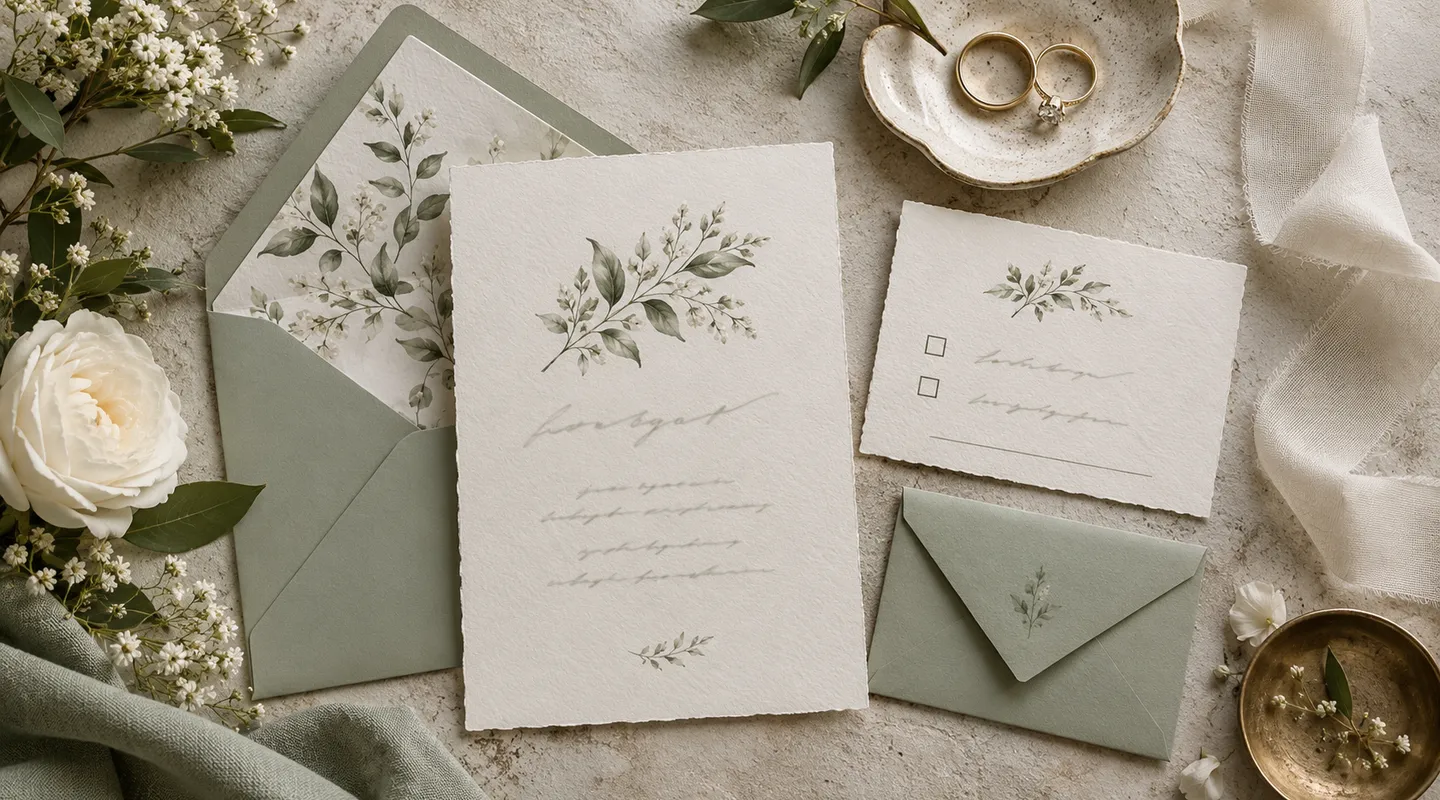
A response card is a small reply form included in the invitation suite. Emily Post's invitation guidance describes it as a way to obtain a reception guest count. It usually matches the invitation's paper and style in a smaller format.
Choose the return method before designing the fields. A card with an envelope gives guests a private paper reply. A postcard removes the separate envelope but must meet postal requirements. An online RSVP can collect event and meal details without a return mailing.
Paper invitations can use online replies. You can print the website instruction on a small response card or the details card. Decide which route fits your guests, then test it with a sample household.
The wedding invitation planning guide explains the suite. Keep the reply card separate from the details card, which carries reception and travel details.
The fields every response card needs
Start with the reply-by date. Make it easy to find at the top. Use the same deadline in the website and guest tracker. A beautiful card with no date leaves guests unsure when you need the answer.
Give guests room to write their names. “Name(s)” is direct and works without a traditional title prompt. A formal card may use an “M” line, where guests complete a title and name, but not everyone will recognize that convention.
Provide both accept and decline choices. A decline is useful details, so make it just as easy to send. “Joyfully accepts” and “Regretfully declines” are common tones; plain “Will attend” and “Will not attend” work too.
If several people share a card, ask which people will attend. A single household acceptance can hide a partial reply. For example, two adults may accept while an invited child can't attend.
A simple response-card wording sample
Kindly reply by May 22
Name(s): __________________
□ Joyfully accepts
□ Regretfully declines
Names of guests attending: __________________
This version works when you don't need meal selections. Leave enough room for all the invited household members. A long-name household should not have to write in tiny letters.
The sample uses a fictional deadline. Set yours from the venue's final-count date. A usual target is 3–4 weeks before the wedding, as described in Bliss & Bone's timing guide, with an earlier deadline when your contracts require it.
Use the lead-time guide to work backward. Leave a follow-up period between replies being due and the final count being submitted.
Reserved seats and number attending
A reserved-seat line can make the invitation clear: “We have reserved two seats in your honor.” Fill the number from the guest list before mailing. Don't print the same number on every household's card unless every household has that allocation.
Pair the seat line with names rather than only a total. “Number attending” tells you how many, but “Names of guests attending” tells you who. You need the names for seating, meals and follow-up.
Example:
Please reply by May 22
We have reserved two seats in your honor.
Guest names: __________________
□ Accepts with pleasure
□ Declines with regret
Number attending: ______
For a household with mixed responses, use a per-person format or ask them to list attending names explicitly. Make an unnamed plus-one field available only for guests who have been offered one. The addressing guide explains the corresponding envelope names.
Meal-choice response-card sample
Collect the meal choices the caterer actually needs. Use one choice per attending guest. A household total such as “two chicken, one vegetarian” may not tell you which person should receive which plate.
Kindly reply by May 22
□ Will attend □ Will not attend
Please write each attending guest's name beside one meal choice.
Chicken: __________________
Fish: __________________
Vegetarian: __________________
Please contact us privately about dietary needs at [contact].
Replace the menu labels with your confirmed options. If the caterer asks for initials instead of full names, tell guests to put initials beside each choice and keep the household name line above it. Check how the catering team will map initials to guests.
For more complex households, an online form can give each named person their own fields. Test a partial acceptance and a decline, as well as an all-attending reply. The form should not force a meal choice for someone declining.
Dietary and access information
Give guests a private contact route for dietary or access needs. Ask only for the details the venue needs to plan. Don't require a medical explanation on a card or a public website field.
A short line can say: “Please share any dietary or access needs with Elena at [contact].” Tell the person collecting replies how those messages will reach the caterer or venue coordinator. Don't let them remain in a separate inbox until the week of the wedding.
Check available meal options with the caterer before printing. A vegetarian checkbox is not a promise that every allergy can be handled by the same dish. Keep a separate planning record for specific requests after you speak with the guest and supplier.
Return envelope or postcard
For a domestic return envelope, print the address of the person collecting replies and provide the correct return postage. Emily Post's response-card guidance describes the traditional card-and-envelope arrangement. The reply address may differ from the outer envelope's return address.
For guests mailing from another country, ask how they would prefer to respond. US postage may not serve their local mailing route. An online or phone option can make the reply easier.
A postcard reply must meet USPS's size and thickness rules to qualify for postcard pricing. USPS's letter and postcard instructions provide the current requirements. Take a sample to the post office if you're uncertain about the card stock or dimensions.
Leave the postcard's mailing side clear for address and postage. Remember that written responses on a postcard are exposed in the mail. Use an envelope or private online route for anything you would not want visible.
Online RSVP wording sample
Please reply by May 22
Visit [wedding website address] to accept or decline.
Enter the name on your invitation to find your household.
If you'd prefer to reply by phone, contact [name and number].
Replace every field and test the actual lookup process. Use the service's real instructions rather than assuming it asks for a name. A QR code can accompany the printed address, but keep the typed route too.
Check the household limits and private event settings. A rehearsal dinner insert should lead to a separate dinner response only for invited guests. One wedding accept box should not automatically accept Friday dinner.
Track and follow up on responses
Keep one master list even if replies arrive by several methods. Mark each person's attendance, meal and date received. Update a reply when a guest calls with a correction rather than adding a second row.
Emily Post suggests lightly marking the backs of cards with an identifying number, linked to the guest list, in case someone forgets their name. If you use that method, keep the number unobtrusive and the mapping in your private tracker.
After the reply deadline, contact the remaining households. Don't turn a blank response into a decline without checking. Check the final name and meal totals before sending them to the venue.
Verdict on response cards
A wedding invitation with response card should make accepting and declining easy. Give guests a clear deadline, room for names and a return route that works. Add meal and event fields only when needed, then track replies per person so the final attendance count is accurate.
Questions people also ask
What should a wedding RSVP card include?
Include a reply-by date, room for names and accept-or-decline choices. Ask which named guests are attending when a household has several people. Add meal choices only when needed, and provide a clear return envelope, postcard or online reply route.
Do we need a number-attending line?
It can help, but pair it with guest names. A total alone does not identify who is attending or which meals they need. A reserved-seat line can clarify the allocation if you fill it accurately for each household before mailing.
Can we use online replies with a paper invitation?
Yes. Print the deadline and website address on a response or details card. Test the real household lookup, guest limits and meal fields. Offer a phone or paper option for guests who need another way to answer.
How should meal choices appear on the response card?
Collect one choice for each attending person using the caterer's actual options. Ask for names or clearly matched initials beside the choices. Give guests a private contact route for dietary needs, and keep those requests in the planning record.