
Vintage Wedding Ideas on a Budget
Borrow china and lace, try secondhand attire, and use old photos and music for a vintage wedding on a budget.
Last updated November 2026
Contents10
- Choose a look and a spending limit
- Dress tables with things you can reuse
- Arrange baby's breath in jars
- Choose vintage attire for less
- Make paper details from what you have
- Give invitations an older style
- Pick music with a past
- Plan vintage transport
- Add vintage details to the ceremony and photos
- Plan setup and returns
Borrowed china, family photos, lace and small jars of baby's breath can make a wedding feel rooted in another time. Start with pieces you already have, choose a few places guests will see them, and add only what fills a gap. A vintage look can suit a garden, barn or simple hall without a room full of antiques.
Choose a look and a spending limit
Vintage can mean a family heirloom, a secondhand find or a new item with an older shape. Start with a decade, a family photograph or a material you love. Use colors or materials you love to guide your choices.
- Pick a reference. Look at an old family wedding photo and note the shapes, flowers and clothes you like.
- Choose a small palette. Pull colors from a tablecloth, a flower or a piece of china you can use throughout the room.
- List the places that need a detail: the ceremony backdrop, welcome table and dining tables are useful starting points.
- Set a limit for decor within your wedding budget. Count delivery, cleaning, setup and return costs as well as purchases.
- Inventory what you can borrow before you shop. Photograph each item and record its owner, condition and return date.
A single old object can set the tone. You do not need an exact period recreation, and you do not need to buy matching sets for every guest. Ask the venue what it supplies before you gather chairs, linens or serving pieces.
Dress tables with things you can reuse
Group a few useful pieces on each table. The goal is an arrangement that leaves room for plates, glasses and conversation. Set up one sample at home and photograph it before deciding how many pieces to collect.
Mismatched china and teacups
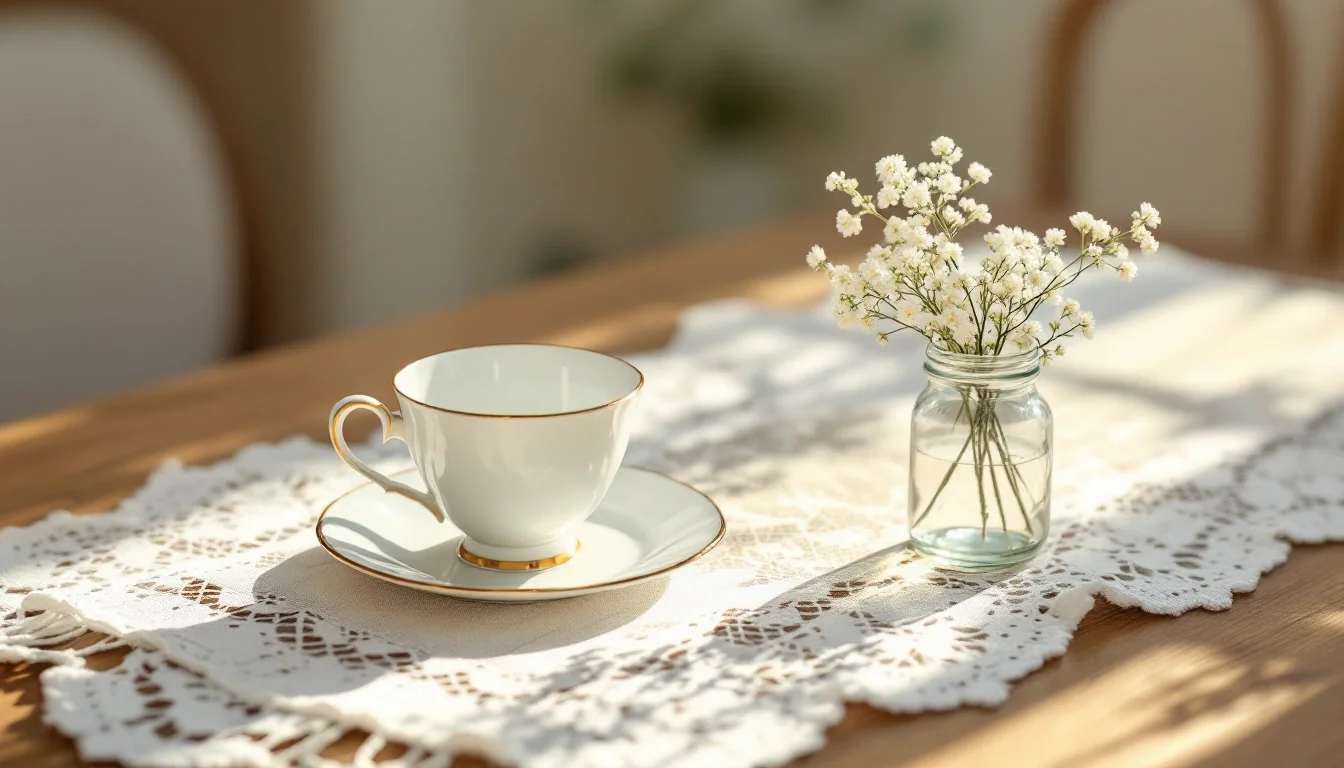
Use sound cups and saucers as part of a tea service if the caterer agrees to handle them. For decoration, group cups with a small vase and folded napkins. A shared color or floral pattern makes mismatched pieces feel deliberate. Ask who will wash and pack borrowed china and how breakage will be handled.
Keep damaged pieces out of food and drink service.
Lace, linens and trays
Lay a lace runner over a plain cloth so its pattern shows. A borrowed tray can gather a few small jars, leaving space around them for service. Use cloth napkins you already own or ask the venue about its linen options. Mixing similar shades can look calm even when the patterns differ.
The Smithsonian's textile guidance, updated in September 2006, recommends a clean, flat surface when examining or storing antique textiles. Keep food and drink out of rooms where they are kept. Do not try repairs or treatment yourself; a textile conservator can advise.
Frames and family pictures
Place copies of family wedding photos in borrowed frames at a welcome or memory table. Ask relatives which photos they are happy to share. Use copies so the originals can stay safely at home. A small card can name the people in each photo if the family agrees.
An empty frame can also hold a printed seating plan. Set it on a sturdy easel or flat surface where guests can approach without blocking the door. The seating chart ideas guide has more ways to make the list easy to find.
Arrange baby's breath in jars
A loose cluster of baby's breath in a clear jar gives the soft, airy look of an old-fashioned flower arrangement. Gather clean jars of similar height, or use a few different sizes on a tray. Ask a florist about available stems and a quote for your date.
The University of Minnesota Extension's July 2025 flower guidance recommends clean containers, fresh water and removing leaves below the waterline. Adapt its cut-flower steps for your jars:
- Wash each jar with hot, soapy water and rinse well. Fill it with fresh water and floral preservative.
- Trim stems with sharp tools, remove leaves that would sit below the water and put the stems in water promptly.
- Place a few stems in each jar, adding more until the shape looks light but balanced. Keep the arrangement low enough for guests to see across the table.
- Pack jars upright in a sturdy box padded with towels. Remove some water for the trip, then top up at the venue.
- Assign a helper to place the jars and move them after the ceremony if the venue permits.
Make one trial arrangement before buying the full order. Count the jars and stems it uses, then multiply by the tables you actually need to cover. Allow for a spare jar and the time needed to fill and transport them. Compare the quote with other budget wedding flower arrangements before ordering.
Choose vintage attire for less
Look for a secondhand dress or suit, or compare rental options before buying. Choose a shape or detail you like instead of trying to copy a whole outfit. A 1951 wedding dress in the Smithsonian collection pairs a fitted waist with lace and a full skirt. A lace collar or a full skirt on its own can suggest that look.
Try a secondhand suit with a bow tie or a borrowed tie. Check fit, condition and the cost of cleaning or alterations before you commit. For a rental, compare the return date and total fee with a secondhand outfit you could wear again. Ask the owner before altering anything borrowed.
Make paper details from what you have
Loose pages from a damaged, unwanted book can become cones for an approved petal toss. You can also cut them into small paper hearts for a tabletop. Check the book with its owner first; a family book may be worth keeping intact. For cones, roll each page into a point, secure the seam and stand the cones in a basket. Fill them close to the ceremony so they stay upright and dry.
Ask the venue about the exact material and cleanup before making a throw. Paper, petals and even items sold as biodegradable may be restricted. If loose pieces are not allowed, use the same paper for a framed sign or choose a held prop. The confetti alternatives guide compares options and gives examples of venue rules.
Old postcards or copies of family recipes can become place cards. Write guests' names clearly and leave room for the caterer's meal markers if needed. A single larger menu at the table is another way to use less paper. Alameda County's zero-waste special event guide, hosted by the EPA, suggests central signs and reusable supplies as ways to prevent event waste.
Give invitations an older style
A Smithsonian wedding invitation plate from 1920 includes the couple's names, ceremony time and church address. Use those details as a starting point for a simple invitation. A plain card with formal wording and a readable typeface can suggest an older style without custom engraving.
Print one sample before ordering the rest, or send the design digitally. Include a clear way to reply and the information guests need to find the venue. Carry the same typeface onto a welcome sign or menu.
Pick music with a past
Listen to the Library of Congress recording of a 1918 wedding march for a period sound. Add a few favorite older songs to a playlist for the ceremony or meal, then mix in music your guests enjoy. Ask the venue what sound equipment it supplies, and test the playlist and volume before guests arrive.
Plan vintage transport
An older car can set the scene for an arrival or a photo. The Smithsonian automobile collection includes a 1918 touring car and a 1931 roadster for inspiration. Ask a friend with an older car whether it could be parked for photos. For a ride, compare a short rental quote with using a car you already have. Confirm the route, pickup time and any decoration rules with the owner.
Add vintage details to the ceremony and photos
Use a lace ribbon around a bouquet or a borrowed brooch on an outfit. A bow tie, a family veil or an older piece of jewelry can carry the theme without changing the whole wardrobe. Try on borrowed clothing early enough to see whether it fits and whether the owner permits alterations. Photograph its condition before and after use.
For the ceremony, focus on a backdrop rather than a decoration on every chair. A pair of flower jars on a stable table or a borrowed frame with fabric can mark the space. Check venue rules for fasteners and open flames. If a lit candle is allowed, the National Fire Protection Association advises a sturdy holder and adult supervision; keep flames away from paper and fabric. Battery lights are an easy option for delicate displays.
Ask the photographer for a few pictures with the objects that matter to you. You can also recreate the pose from a family wedding photo, then return to your own celebration without trying to stage every moment.
Plan setup and returns
A low-cost collection still takes work to move and put away. Write a short plan that a helper can follow without having to make design decisions during the reception.
- Pack each table's items together and add a photo of the sample arrangement.
- Label borrowed pieces with the owner's name on removable packing material, not on the object.
- Name a person to set out each group and another to pack it after the event. Confirm the venue's access and collection times.
- Separate returns, keepsakes and donations into marked boxes. Agree with a recipient before dropping off flowers or decor.
- Check the borrowed inventory against your photos and return each piece as agreed.
For more ways to use the ceremony space well, see wedding ceremony ideas on a budget.
Questions people also ask
Does a vintage wedding need to follow one decade?
No. Mix pieces from different periods by choosing a shared color or material.
Where can I find vintage items without buying a full collection?
Ask family and friends what they can lend, then check local secondhand shops or rental inventories for the gaps. Record the owner of each borrowed item and arrange its return.
Can I use a chipped teacup as a candle holder?
Use a battery-operated votive in the cup. A damaged cup may be unstable, and a flame near paper or fabric creates a fire risk. Keep the sharp edge away from guests.
How can I give a modern venue a vintage feel?
Pick a focal point such as the welcome table, then repeat a material or color at the dining tables. A few framed family photos and borrowed linens can give the room a personal history without covering every surface.
What can I do with the decorations after the wedding?
The county guide suggests donating usable flowers and decorations to schools, hospitals, women's shelters or group homes.