Floral Arrangements for Weddings on a Budget
Choose floral arrangements for weddings on a budget with a clear guide to in-season blooms, DIY options and where to spend versus save.
Contents10
- Start with in-season, local flowers
- Decide where flowers matter most
- Stretch the budget with greenery and repetition
- Move flowers from the ceremony to the reception
- DIY versus hiring a florist
- Consider alternatives to a full florist package
- Questions to ask before you commit to a plan
- Timing your flower order and pickup
- What affects a florist's quote beyond the flowers themselves
- Fit flowers into your overall budget
Floral arrangements for weddings on a budget come down to three choices: what's in season, what you DIY versus hire out, and where you concentrate the flowers instead of spreading a small budget too thin. This guide walks through each choice without naming specific vendors or prices, since those vary too much by region and season to be useful here.
The short answer: choose in-season, locally available flowers, concentrate your budget on a few focal points instead of flowers everywhere, and decide deliberately which pieces to DIY and which to leave to a professional. All three choices matter more than any single flower type.
Start with in-season, local flowers
Flowers that are in season for your wedding date and available locally almost always cost less than flowers that have to be imported or forced out of season. Availability shifts by region and time of year, so ask a local florist or check a seasonal flower guide for your area rather than planning around a specific bloom you saw somewhere else.
If you have your heart set on a flower that's out of season for your date, ask a florist whether a similar-looking in-season alternative exists. Many popular wedding flowers have visually similar substitutes that cost less because they're naturally available when you need them.
Decide where flowers matter most
Instead of spreading a limited flower budget evenly across every possible spot, decide which few areas actually get seen and photographed the most. For most weddings, that's the bouquet, the ceremony backdrop or arch, and maybe the head table or sweetheart table. Areas guests barely glance at, like a guest-book table or restroom sign, rarely need fresh flowers at all.
Concentrating your budget this way lets you go a little bigger on the pieces that show up in photos while skipping flowers in spots that won't be remembered either way.
Stretch the budget with greenery and repetition
Greenery, like eucalyptus, ferns or trailing vines, typically costs less than flowers and can fill out an arrangement so it looks full without needing as many blooms. A few flowers paired generously with greenery often reads as more intentional than an arrangement made entirely of premium stems packed tightly together.
Repeating the same flower types across different pieces (bouquet, boutonnieres, centerpieces) is also more efficient than choosing a different variety for each spot, since florists can often buy in bulk for a repeated flower rather than sourcing several different types in smaller quantities.
Move flowers from the ceremony to the reception
Ceremony flowers, like an arch arrangement or aisle markers, don't have to stay in one place for the whole day. Many couples plan for these pieces to be moved to the reception space after the ceremony, so the same flowers do double duty instead of buying two separate sets.
This works especially well if the ceremony and reception happen in the same venue, since the move takes less coordination. If they're in different locations, ask whether the florist or a designated helper can handle the transport as part of the plan.
DIY versus hiring a florist
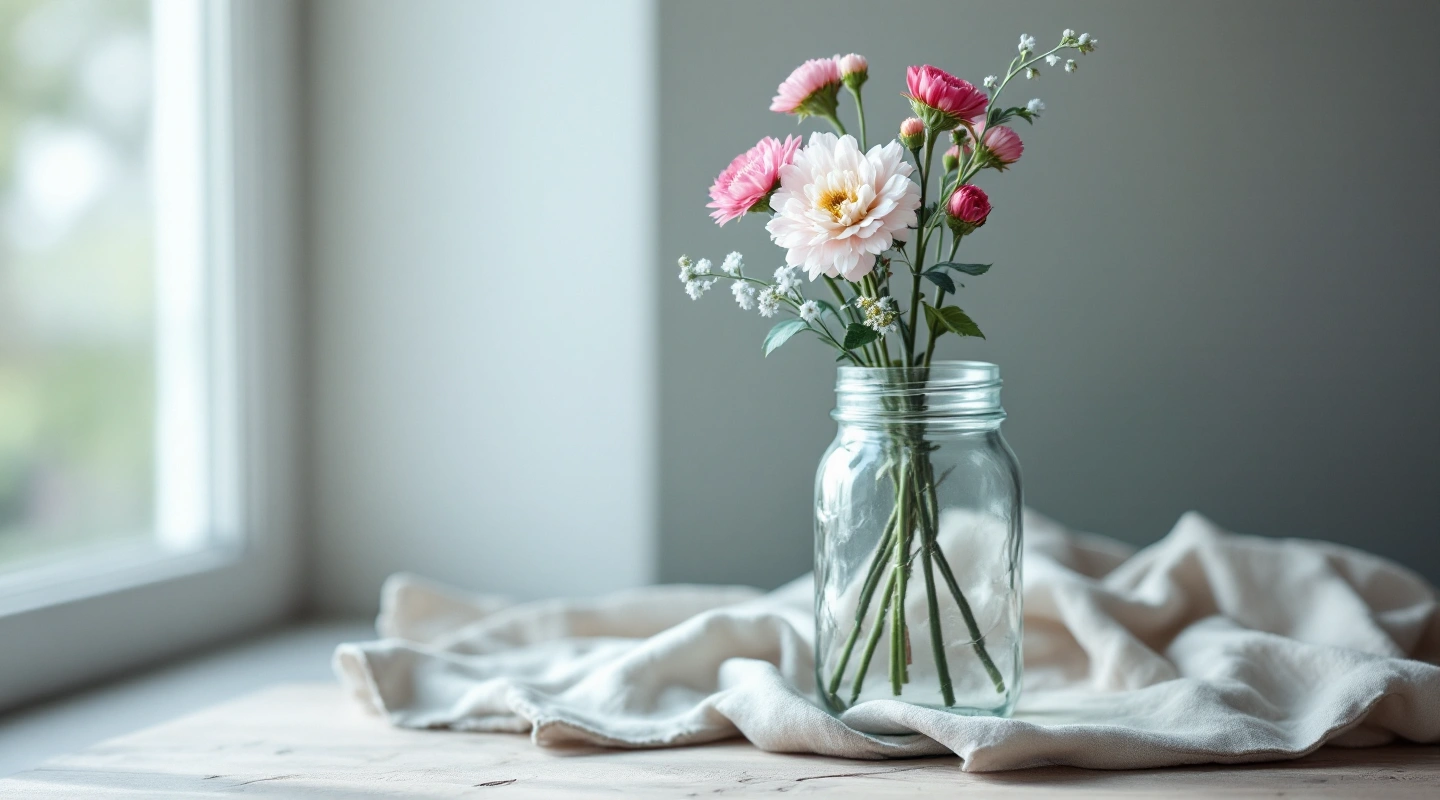
DIY makes the most sense for simpler pieces: centerpieces made from a few stems in a vase, boutonnieres, or loose greenery garlands for a table runner. These don't need to hold a specific shape under pressure and are more forgiving if the first attempt isn't perfect.
A professional florist is usually worth the cost for anything structural or high-stakes: a bouquet that needs to look fresh and hold together through hours of handling and photos, a large installation like an arch or hanging arrangement, or any piece where a mistake would be hard to fix on the day. If you're on the fence, consider a hybrid approach: hire a florist for the bouquet and any structural pieces, and DIY the simpler centerpieces yourself.
If you do DIY, practice with a trial arrangement well before the wedding, using flowers you can buy locally around that same time of year. This tells you how the actual flowers behave, how long they last out of water, and how much time the real thing will take.
Consider alternatives to a full florist package
Some couples reduce cost by ordering flowers in bulk from a wholesale or farmers market source and arranging them with help from friends or family the day before. Others use a mix of fresh and high-quality silk or dried flowers for pieces that need to last through a long day or be set up early. Potted plants or flowering branches can also serve as centerpieces and be repurposed as gifts or kept afterward, instead of being thrown away.
Each of these options trades some amount of time, coordination or a different look in exchange for potential savings, so weigh them against how much flexibility and help you actually have leading up to the wedding.
Questions to ask before you commit to a plan
- What flowers are realistically in season and available for my date and region?
- Which parts of the day will actually be seen and photographed the most?
- Can any ceremony arrangements move to the reception space afterward?
- Which pieces am I comfortable DIYing, and which need a professional's hand?
- If hiring a florist, what's included in a quote (delivery, setup, breakdown) versus billed separately?
Answering these before you start comparing florists or buying supplies keeps the decision focused on what actually matters for your wedding, instead of collecting ideas that don't fit your budget or timeline.
Timing your flower order and pickup
Ordering flowers with enough lead time gives a florist room to source in-season stems at their best price and availability, rather than scrambling closer to your date. If you're sourcing flowers yourself from a wholesale or farmers market source, confirm exactly when they'll be available for pickup relative to your wedding date, since most fresh flowers need to be arranged within a day or two of purchase to look their best.
Ask any florist about their standard lead time and whether rush orders carry an added fee, so you know the cost of deciding late versus planning ahead.
What affects a florist's quote beyond the flowers themselves
A florist's price reflects more than the cost of the stems: labor for arranging, delivery, setup, breakdown, and rental items like vases or stands if those aren't something you provide yourself. Two florists quoting the same flower types can still land at very different totals depending on how much labor and logistics are built into each quote.
When comparing florist quotes, ask what's included so you're comparing full totals rather than just the flower cost portion of each estimate.
Fit flowers into your overall budget
Flowers are one category among several, and it's easier to make good trade-offs when you can see how this line compares to the rest of your plan. Track your floral estimate and any real quotes in the wedding budget planner, and see the budget wedding guide for other categories where couples typically find savings. If you're also planning the ceremony itself on a budget, the wedding ceremony ideas on a budget guide covers decor choices beyond flowers.
Questions people also ask
What's the easiest way to lower the cost of wedding flowers?
Choose flowers that are in season and locally available for your date and region, since out-of-season or imported blooms usually cost more. Pairing a few statement flowers with greenery also stretches a smaller flower budget further than an arrangement made entirely of premium blooms.
Should I DIY my wedding flowers or hire a florist?
DIY can save money on simple arrangements like centerpieces and boutonnieres, especially if you have help and time to practice beforehand. A florist is usually worth it for anything structural, like a bouquet that needs to hold up through a full day of photos, or a large installation.
Do I need fresh flowers for every part of the wedding?
No. Many couples reserve fresh flowers for the bouquet and a few key spots, like the ceremony arch or head table, and use greenery, candles or other decor for less prominent areas. This keeps the flower budget focused on what guests and photos will actually notice.
Can I reuse ceremony flowers at the reception?
Yes. Moving ceremony arrangements, like aisle flowers or an arch, to the reception space is a common way to get more use from the same flowers without buying a second full set.