Wedding Ceremony Ideas on a Budget
Find wedding ceremony ideas on a budget for venue, decor, music and officiant choices that keep this part of the day affordable without feeling bare.
Contents21
- Choose a space that does some of the work for you
- Combine ceremony and reception in one venue
- Keep the ceremony focused
- Decor: where to spend and where to skip
- Reuse ceremony pieces at the reception
- Music and sound on a budget
- Officiant choices that lower cost
- Ceremony programs and paper goods
- Seating and guest comfort without overspending
- Weather and backup planning
- Ceremony seating arrangements that save on rentals
- Unplugged and phone-free ceremony ideas
- Weekday and off-season ceremony considerations
- Involving family and friends to lower ceremony costs
- Choosing a ceremony time that works with your budget
- Guest book and small ceremony touches on a budget
- Rehearsal costs tied to the ceremony
- Officiant scripts and ceremony length
- Ceremony ideas for different seasons
- Bring the ceremony budget into your full plan
- Keep the ceremony itself the priority
Wedding ceremony ideas on a budget usually come down to three choices: picking a space that already looks good without much added decor, keeping the ceremony focused rather than long and elaborate, and being deliberate about where the small budget you do have actually gets seen.
The short answer: choose a venue with built-in charm so you need less decor, combine your ceremony and reception in one space to avoid a second rental fee, and concentrate your decor budget on the backdrop behind the couple, since that's what shows up in almost every photo.
Choose a space that does some of the work for you
A venue with natural charm, a garden, a scenic outdoor overlook, a historic building with character, needs far less added decor to look finished than a plain rented hall. Before you start planning decor, look for a ceremony space that already gives you something to work with.
Public parks, botanical gardens with a permit fee, a backyard, or a simple outdoor space with good natural light can all serve as a ceremony backdrop without a large decor budget. If your reception venue also has a suitable outdoor or indoor space for the ceremony, using that same location avoids a second rental fee entirely.
Combine ceremony and reception in one venue
Booking two separate venues means two rental fees, two setup windows, and often two rounds of vendor delivery and pickup. If your venue has a space that works for both the ceremony and the reception, even with a quick changeover in between, this is one of the more effective ways to lower the total cost tied to the ceremony specifically.
Ask your venue what a same-location changeover typically involves: how much time is needed to flip the room, whether staff handles it or you need to arrange your own help, and whether there's an added fee for using two configurations in one day.
Keep the ceremony focused
A shorter, well-run ceremony doesn't cost less by default, but it does reduce the amount of space, seating, sound equipment and time you need to plan around, which can lower costs tied to each of those pieces. A focused ceremony script, without adding elements just because other weddings include them, also gives your officiant and any readers less to plan and rehearse.
Decor: where to spend and where to skip
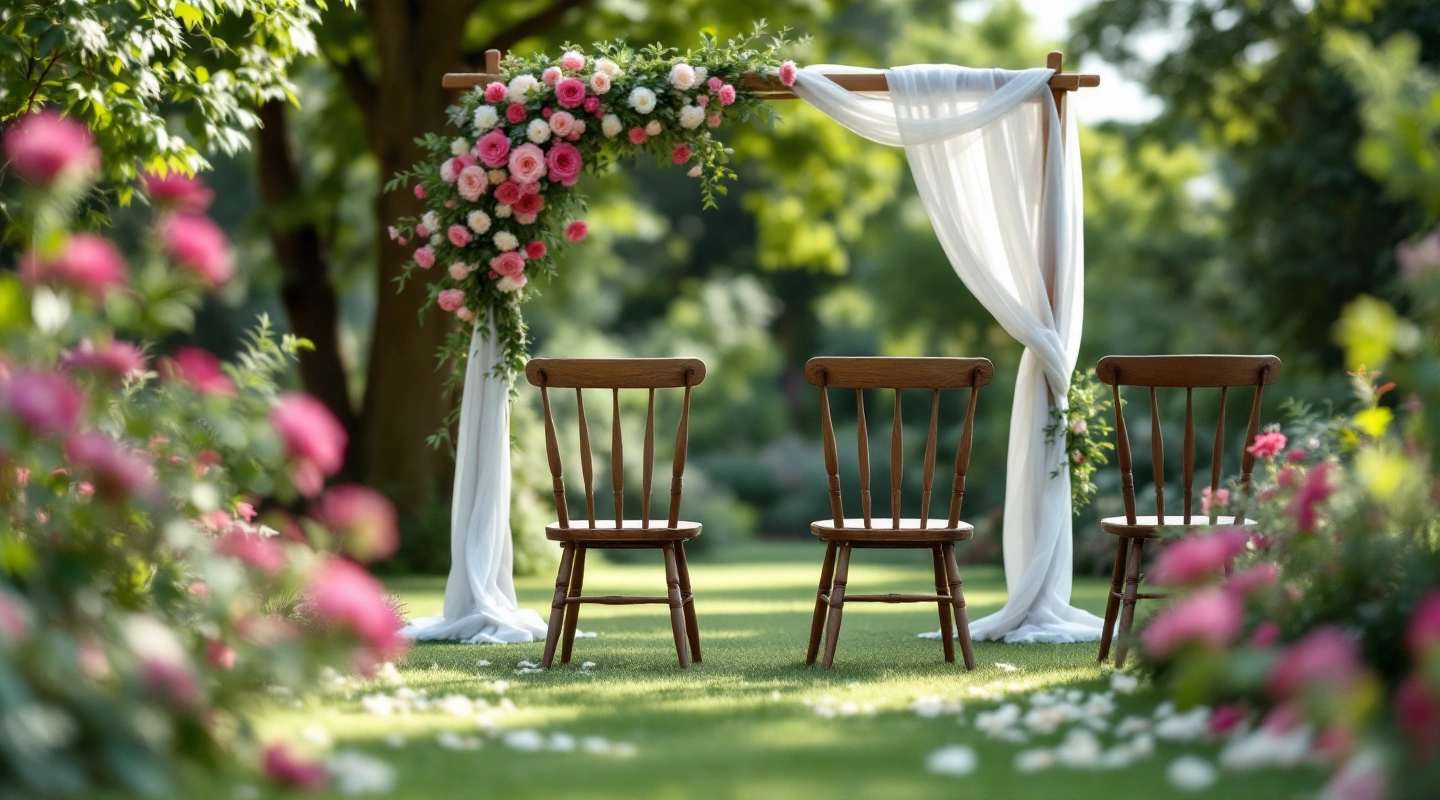
- The backdrop behind the couple. This is what shows up in nearly every ceremony photo, so it's worth concentrating your decor budget here rather than spreading it evenly. An arch, a simple floral arrangement, or even a well-chosen natural backdrop can serve this purpose.
- Aisle decor. Minimal aisle decor, like simple petals or small arrangements at the end of each row, reads as intentional without needing decor at every single seat.
- Seating. If your venue doesn't already have suitable seating, rented chairs are often a necessary cost, but elaborate chair decor (bows, covers, ribbons) is optional and easy to skip or simplify.
- Signage. A simple printed or hand-lettered sign for programs, seating or unplugged-ceremony requests costs far less than a custom-built welcome display.
Reuse ceremony pieces at the reception
Arch flowers, aisle arrangements and other ceremony decor don't need to stay in one place. Many couples plan for these pieces to move to the reception space right after the ceremony, so the same decor and flowers get used twice instead of buying two separate sets. This works most easily when the ceremony and reception are in the same venue, since the move takes less coordination.
Music and sound on a budget
A curated playlist run through a simple speaker system, whether the venue's own sound setup or a rented speaker, costs far less than hiring live music and still lets you choose meaningful songs for key moments like the processional and recessional. If you want live music, a single musician (a guitarist, violinist or vocalist) is usually more affordable than a full ensemble and can still create a memorable atmosphere.
Whatever you choose, test the sound setup ahead of time, especially outdoors, where wind and open space can make quiet music or vows hard to hear without adequate amplification.
Officiant choices that lower cost
Many states allow a friend or family member to become ordained online for a low fee and legally officiate your ceremony. This can lower the officiant line significantly compared to a professional officiant, and it also lets someone who knows you personally lead the ceremony. Check your state's specific requirements for a non-professional officiant well before the wedding, since paperwork and registration rules vary.
Ceremony programs and paper goods
A printed program is optional, and if you choose to have one, a simple design printed at home or through an affordable online printer costs far less than a specialty stationer. Some couples skip printed programs entirely and use a single sign instead, listing the wedding party and order of events for anyone who wants to glance at it.
Seating and guest comfort without overspending
Comfortable seating and decent sound matter more to how guests remember the ceremony than elaborate decor does. If you're working with a tight budget, prioritize simple, functional chairs and a sound setup that reaches every seat over decorative extras that guests are less likely to notice or remember.
Weather and backup planning
An outdoor ceremony on a budget still needs a weather plan, since a scramble for a last-minute indoor space or tent rental on the day of typically costs more than planning a backup in advance. Ask your venue about their indoor backup option and what it would cost if you need to use it, and build that possibility into your planning even if you're hoping not to need it.
Ceremony seating arrangements that save on rentals
If your ceremony space has built-in seating, like a garden amphitheater, a park with natural seating areas, or a venue with existing outdoor chairs, you skip the rental fee and delivery cost of bringing in chairs specifically for the ceremony. Even a standing ceremony, common for shorter, more casual celebrations, removes the seating cost entirely, though check that this fits your guest list's needs, particularly for guests who may need seating for mobility reasons.
If you do need rented chairs, ask whether the same chairs can be moved from the ceremony to the reception space rather than renting two separate sets, which is a straightforward way to cut this cost when the two events are in different areas of the same venue.
Unplugged and phone-free ceremony ideas
An unplugged ceremony, where guests are asked to put phones away during the ceremony itself, doesn't have a direct cost either way, but it does affect your photography plan. If guests aren't taking their own photos, a hired photographer's angle and coverage matter more, so this is worth discussing with your photographer in advance if you're planning to request an unplugged ceremony.
Weekday and off-season ceremony considerations
If you've already chosen an off-peak date to save on the reception, the same date typically applies to ceremony-specific costs too: officiant availability may be more flexible, and any ceremony-only venue fee, if your ceremony space charges separately from the reception, is often lower outside of peak wedding season and peak days of the week.
Involving family and friends to lower ceremony costs
Asking a friend or family member to handle ceremony music, readings, or even officiating (where your state allows it) not only personalizes the ceremony but can lower costs that would otherwise go to a hired professional. This works best when you choose people who are comfortable with the responsibility and give them enough lead time to prepare, rather than asking at the last minute and adding stress to their experience of your wedding.
If a friend or family member is handling a meaningful role, like coordinating the ceremony's flow or managing the sound equipment, consider a small thank-you gift as a way to acknowledge the contribution, which is a modest cost compared to hiring that role out.
Choosing a ceremony time that works with your budget
The time of day you hold your ceremony affects more than just the mood of your photos. A morning or early-afternoon ceremony often pairs naturally with a shorter, simpler celebration afterward, like a brunch or lunch reception, which tends to cost less than an evening reception with a full dinner and extended bar service. An evening ceremony followed by a longer reception generally carries more cost across catering, bar and lighting, simply because the event runs longer and needs more infrastructure to support it after dark.
If your priority is the ceremony experience itself rather than an extended evening celebration, consider whether a shorter overall event, ceremony plus a modest gathering, meets your goals better than a full traditional timeline built around an evening reception.
Guest book and small ceremony touches on a budget
Small ceremony touches, a guest book table, a unity ritual like a sand ceremony or handfasting, a program listing the order of events, add personal meaning without necessarily adding much cost. Many of these can be made or assembled at home rather than purchased as a kit, and some traditions require no purchased materials at all, just a clear plan for how the moment will unfold during the ceremony.
If you want a unity ritual but the traditional version involves a purchased kit, look for a simplified version using items you already own. A shared drink poured from two vessels into one, for example, achieves a similar symbolic effect without a specialty purchase.
Rehearsal costs tied to the ceremony
A ceremony rehearsal, usually held the day before the wedding, doesn't have to carry its own cost beyond the time it takes. If your ceremony venue allows a free walkthrough the day before, use it. Some venues charge a separate access fee for a rehearsal, so ask about this when booking, since it's an easy cost to overlook until it shows up on a final invoice.
A rehearsal dinner afterward is a separate cost from the rehearsal itself, and can be kept simple, a casual meal at home or a low-key restaurant gathering, without affecting how the ceremony itself is planned or budgeted.
Officiant scripts and ceremony length
Requesting a shorter, simpler script from your officiant, whether hired or a friend serving in that role, doesn't reduce vendor cost directly in most cases, but it does reduce the amount of seating, sound support and guest attention span you need to plan around. A ceremony that runs fifteen to twenty minutes is generally easier to support with a basic sound setup than a much longer ceremony with multiple readings and rituals, which may need a more robust microphone setup to keep guests in the back rows engaged throughout.
Ceremony ideas for different seasons
A ceremony planned around your season's natural strengths can reduce how much added decor and infrastructure you need. A spring or early summer outdoor ceremony can lean on blooming surroundings for a backdrop instead of built decor. A fall ceremony can use natural foliage color as its palette rather than purchased florals. A winter indoor ceremony can lean on a venue's existing warmth, like a fireplace or string lighting already installed, instead of importing seasonal decor from elsewhere. Matching your ceremony concept to what your season already offers is one of the more overlooked ways to keep this category affordable.
Bring the ceremony budget into your full plan
Ceremony-specific costs, decor, music, officiant, seating, are usually a smaller share of the total budget than venue and catering, but they're an easy place to overspend if you don't set expectations early. Track your ceremony line items in the wedding budget planner alongside the rest of your budget. For more on choosing flowers specifically for the ceremony and elsewhere, see the floral arrangements for weddings on a budget guide, and for broader strategies across every category, see the budget wedding guide.
Keep the ceremony itself the priority
It's easy to spend planning energy on decor and details while the ceremony content — the words, the readings, the moment itself — gets the least attention. A ceremony can feel meaningful and complete with almost no spending on decor at all, as long as the couple and officiant put real thought into what's actually said and done. Treat decor as the layer on top of a ceremony that already works, not the thing that makes it feel real.
Questions people also ask
How can I have a nice wedding ceremony without spending much?
Choose a venue with built-in charm, like a garden or a scenic outdoor spot, so you need less added decor. Keep the ceremony short and focused, and spend on a few details guests will actually notice, like seating comfort and sound, rather than elaborate decor that gets seen for only a few minutes.
Do I need a separate ceremony venue from the reception?
No. Booking the ceremony and reception at the same venue avoids a second rental fee and a second round of vendor setup and delivery, which is one of the more effective ways to lower ceremony-related cost.
What's the cheapest way to handle ceremony music?
A curated playlist through a speaker system, run by a friend or the venue's sound setup, costs far less than a live musician or ensemble. If you want live music, a single musician, like a guitarist or violinist, usually costs less than a full ensemble.
How do I decorate a ceremony space on a budget?
Focus decor on the backdrop behind the couple, since that's what shows up in nearly every ceremony photo, and keep aisle and seating decor minimal. Reusing ceremony flowers or decor at the reception afterward also stretches a smaller decor budget further.