
Wedding Food Station Ideas
Wedding food station ideas for a full dinner or an extra course, with the holding, power and staff each needs, plus sourced portions and a way to plan serving lines.
Last updated November 2026
Contents6
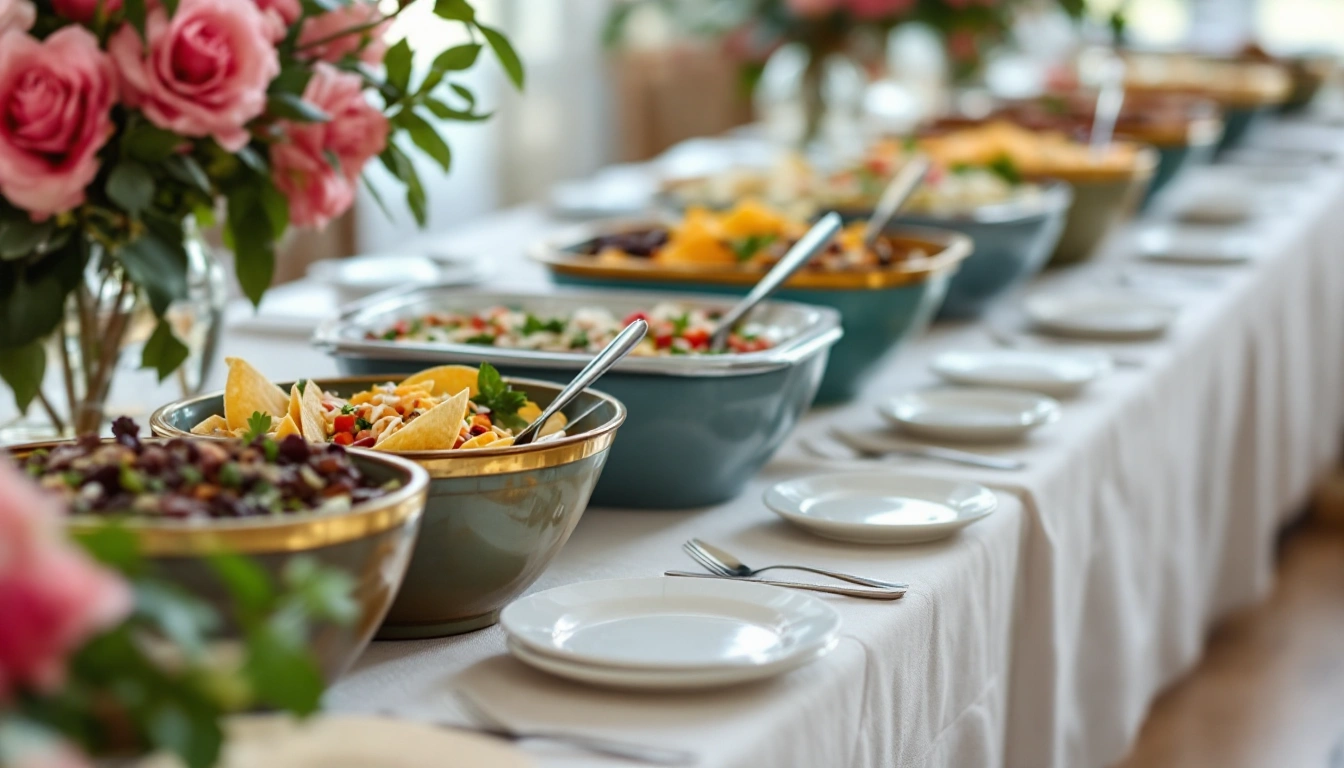
A pasta bar can form the main meal; an oyster counter or dessert table adds a course. Choose wedding food station ideas by the role they fill, then compare the gear and work each one needs.
A pasta bar, a taco counter or a carving station can each carry a full dinner; an oyster counter, a dessert table or an ice cream cart adds a course. Ask the caterer how many guests one serving position handles in your meal window, and plan the number of positions from that.
Compare wedding food station ideas by setup
One menu can have several serving positions. Two matching taco counters may serve the room better than one taco counter and a slow cook-to-order station. Set the meal window in your reception plan before choosing the number of menus.
The setup column lists power, staff and the main task. Confirm the actual equipment with your caterer.
| Station | Holding | Setup |
|---|---|---|
| Pasta | Hot | Power; cook tosses batches |
| Sliders | Hot; cold slaw | Power; server fills buns |
| Potato bar | Hot; cold dips | Power; helper refills bowls |
| Salad | Cold | Ice or power; helper swaps trays |
| Carving | Hot | Power or fuel; chef slices |
| Pizza | Hot | Oven power or fuel; crew bakes |
| Tacos | Hot; cold salsa | Power; team refills pans |
| Sushi bowls | Cold | Cooling power; team makes bowls |
| Oysters | Cold | Ice or power; team shucks |
| Desserts | Varies by recipe | Cooling if needed; helper cuts slices |
| Ice cream | Frozen | Freezer power; server scoops |
Scroll for more →
Wedding food station ideas for dinner
The caterer and venue should agree on cooking space, cold storage and power before you book the menu. The holding guide below explains the safety needs behind the table.
1. Pasta with a choice of sauces
Offer one pasta shape and two sauces, with one suitable for guests who avoid meat. A cook can toss small batches while a server adds toppings. Put the sauce choices before the pickup point so guests decide before reaching the cook.
2. Sliders with slaw
Serve filled sliders rather than making each guest build one from scratch. Keep slaw at a separate cold point. Count buns as well as filling when you check recipe yields; the smallest item can run out first.
3. A mashed-potato bar
Use bowls for mashed potatoes with toppings such as chili, cheese or roasted vegetables. Let guests take the potato base first and toppings next. Agree whether this is a side or a main course before setting portions.
4. A salad bar with filling options
Set out greens, beans and a choice of protein, with dressings at the end. Pre-filled salad bowls reduce the number of choices made in line. Leave room behind the counter for the helper to swap chilled trays without reaching across guests.
5. A carving station
A chef slices roast meat at a cutting bench, with a server handling sides. Decide whether each plate includes meat or whether guests choose a separate main. Put bread and sauces after the carving point to keep the chef's space clear.
6. Pizza by the slice
Cut slices before they reach the counter. A small menu of toppings lets the oven crew bake batches rather than a separate pizza for each guest. The oven, cutting bench and pickup line each need their own space.
7. Tacos and nachos
Place fillings before salsa and other toppings. Show a few suggested combinations to help guests choose quickly. If most guests want the same filling, serve it at both ends rather than making everyone wait at one pan.
8. Sushi bowls or small trays
Small ready-filled bowls avoid a queue for rolls made to order. Offer cooked seafood or vegetable choices and leave room for the team to bring out fresh batches. Cooked rice needs temperature control too: University of Minnesota Extension includes cooked grains among foods that need it.
Extra courses and dessert stations
These ideas work alongside dinner. They do not need to open at the same time as the main stations.
9. An oyster counter
Give the shucking team a separate work area and plan where meltwater will drain. Tell guests clearly if oysters are raw and offer a cooked alternative. The CDC warns that raw oysters can carry germs that cause serious illness; cooking them properly kills harmful germs. Ice is for cold holding, not a substitute for cooking.
10. One mixed dessert table
Combine doughnuts, pie slices and cookies at one serving point. Cut pies before service and put tongs beside the doughnuts. Choose desserts by their storage needs: a cream-filled dessert needs a different setup from a plain cookie. Include cake here if you want one dessert queue rather than two.
11. Scooped ice cream
A server needs space between the freezer and the pickup point. Limit flavors to a few choices and put toppings after the scooping area. Confirm the freezer's power needs before choosing an outdoor position.
Plan the flow and quantities for 100 guests
Serving positions needed = guests divided by the guests one position serves in the meal window, rounded up. Time a trial with the actual plate, food and serving tools, count complete servings in your window including refills, and divide 100 by that number. If guests visit several stations, plan capacity for those visits too. A position means a place where a guest is served, not a different menu.
For portions, Iowa State University Extension's graduation-party guide gives these estimates per person, for an open house where it plans on about 60% of invited guests and 1 to 1.5 pounds of food per guest in total:
- Protein: 6–8 ounces.
- Sides: 4–6 ounces.
- Sliders: 1.5–2 ounces of meat each.
- Tacos: 2–3 per person.
- Coleslaw: 13–17 pounds of finished slaw for 50 guests.
- Cake: one slice.
- Cookies or bars: one to two, as a dessert choice.
Those are open-house figures, not a seated wedding dinner, and the guide's quantities for 50 mix raw meat weights with finished-salad weights, so read each line's unit. Use them to start a portion discussion, then have the caterer set recipe yields for your meal. For example, 100 people each taking a 4-ounce side need 400 ounces, or 25 pounds, of that side. Do not order a full dinner portion at every station if guests will choose between them.
Count dietary meals and crew meals in the final order. For a home venue, fit storage and washing space into your backyard wedding plan.
Keep self-serve and outdoor food safe
The FDA's home-buffet guidance says to hold hot food at 140°F or above and cold food at 40°F or below. Discard perishables left without that control for more than two hours, or one hour above 90°F. Use a food thermometer. These are holding rules, not cooking temperatures; the caterer must follow the food-service rules that apply to the venue.
The same FDA guide advises replacing nearly empty dishes with fresh ones rather than topping them up. Put someone in charge of tray changes and time checks. Give each food its own serving utensil, as the Minnesota Extension guide advises.
Keep ingredient lists with the serving team. The FDA lists nine major food allergens: milk, eggs, fish, crustacean shellfish, tree nuts, peanuts, wheat, soybeans and sesame. Collect guests' dietary needs and agree suitable meals with the caterer before the final order.
Bring it together
Add the food service window to your wedding plan. Choose a menu your space can handle, then check the busiest queue before adding another station.
Questions people also ask
Can food stations replace a wedding dinner?
Yes. Pasta, tacos, sliders or a carving station can form a full dinner with suitable sides. Plan a filling meal for guests with dietary needs, too. A dessert table or oyster bar works as an extra course rather than the whole meal. Keep seats available while guests eat.
Are wedding food stations cheaper than a plated meal?
Compare full quotes for the same guest count and menu. Include cooking equipment, staff, power, plates, transport and cleanup. A chef cooking each order may need more time and equipment than a table of ready-filled plates. The menu and service plan decide the cost, rather than the station label.
How many food stations do you need for 100 guests?
Divide the guest count by the number of guests one serving position can serve in your meal window, and round up. If a timed trial gives 30 guests per position, 100 guests need four positions. Allow for repeat visits, and ask the caterer for the figure for each station.
How long can food sit out at a wedding station?
FDA home-buffet guidance says to discard perishables after more than two hours without hot or cold holding, or one hour above 90°F. Keep hot food at 140°F or above and cold food at 40°F or below. These are holding temperatures, not cooking temperatures.
How much food should you plan per guest?
Iowa State Extension's guide for graduation open houses suggests 6–8 ounces of protein and 4–6 ounces of sides per person, with one slice of cake or one to two cookies or bars for dessert, inside a total of 1 to 1.5 pounds of food per guest. Those are open-house estimates; have the caterer set the amounts for a seated wedding menu.