
Indoor vs Outdoor Weddings: How to Choose
Choose indoors for a predictable setting and simpler weather plan. Choose outdoors for the landscape if you can arrange a workable backup.
Last updated November 2026
Contents5
Compare the settings
An indoor room gives you a roof, walls and a defined layout. Ask what the room includes: some venues supply chairs, tables, lighting and staff, while others rent the space alone. Windows and an adjoining terrace can bring in a view, but check whether those areas are part of your booking.
A garden, beach or lawn can make the setting itself a focal point. You may need less decoration if you like the view as it is. Outdoor spaces also bring more moving parts. The ground, shade, wind and distance to restrooms all affect the day.
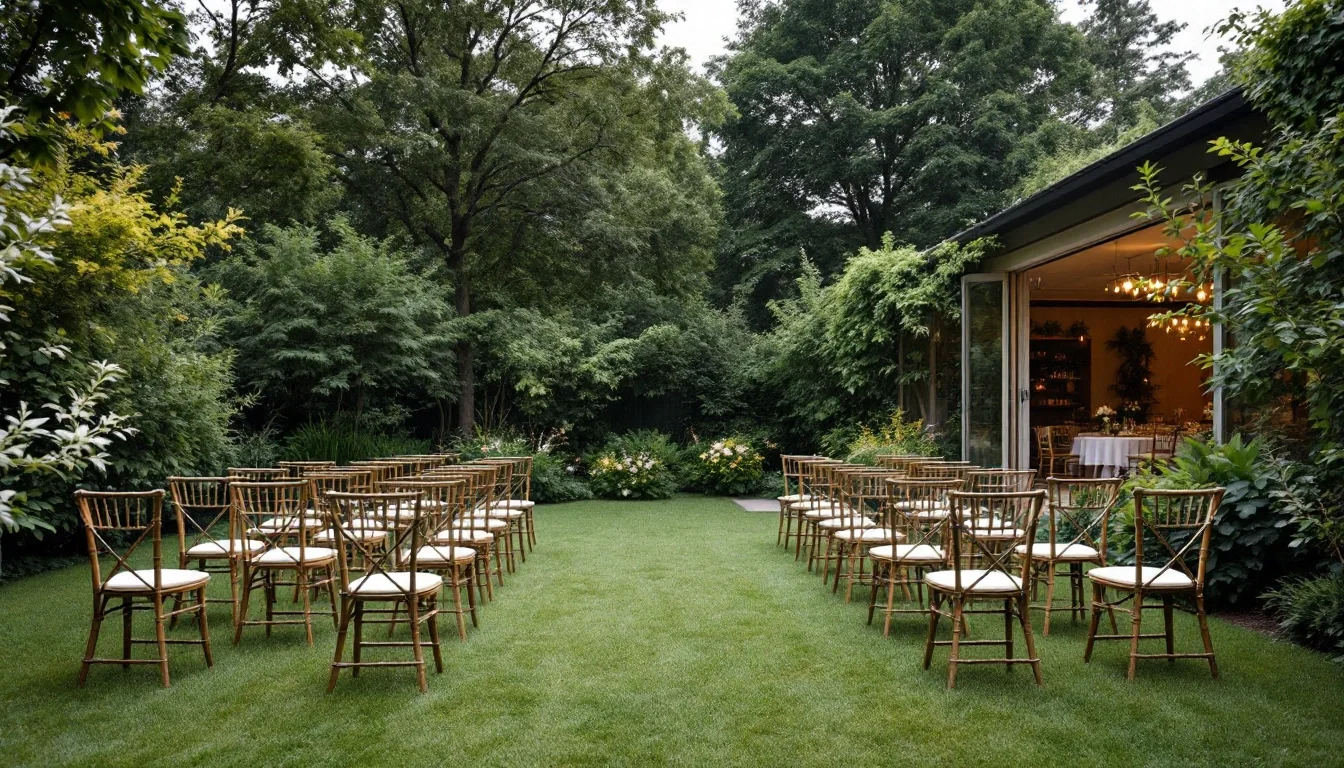
A venue with both options can be a good middle ground. You can plan an outdoor ceremony and an indoor meal, for example. Do not assume the indoor room is available as a backup just because it is on the property. Ask who else can book it, what it holds and whether moving inside costs extra.
Compare the whole bill
Indoor and outdoor venues differ in what they include. Get an itemized quote for each venue and compare like with like.
- Write down the venue fee and the hours included, including setup and cleanup.
- List tables, chairs, linens, lighting, sound, restrooms and power. Mark what each quote includes.
- Add any delivery, setup, pickup, staffing, permit and cleanup charges you have been quoted.
- Price the weather backup, including any tent, sides, flooring or alternate room you actually need.
- Add the items for each option and ask about charges that can change with guest count or timing.
Use quotes for your date, location and guest count. Our wedding cost guide helps you fit the venue total into the rest of your budget. For ways to compare specific spaces, see budget friendly wedding venues.
Ask when the final balance is due and what happens to deposits if you change the date. Read the venue and rental contracts together. A tent reservation may have a separate deadline and payment schedule from the venue itself.
Make a weather plan before booking
A backup needs a place, a decision point and people who can carry it out. Think about rain, heat, cold, wind and storms for the location and time of year. A tent may help with rain or sun, but its use depends on the product, the ground and the weather. Ask the supplier about its limits and the venue about permits and installation.
- Identify the backup room or other covered space and confirm it is reserved for your event.
- Check that the backup fits your guest list, tables, catering and any ceremony setup you want.
- Ask who decides to move, when that decision must be made and how staff will reach vendors and guests.
- Agree on a separate storm shelter and an evacuation route with the venue. Rain shelters and sheds are not safe in lightning, so a tent is not a lightning shelter either.
The National Weather Service's outdoor activity guidance says to stop outdoor activity immediately when a thunderstorm is in the area and get to a substantial building with wiring and plumbing. If there is no such building, a hard-topped metal vehicle with closed windows offers protection. Its guidance says to wait at least 30 minutes after the last thunder before going back outside. Name someone to watch the weather and make sure they can contact the venue team.
For a home setting, the backyard wedding guide covers the extra work of arranging a site that is not already set up for events.
Walk the guest route
Visit each space with your guest list in mind. Start where people arrive and follow the route to the ceremony, meal, restrooms and exit. Ask about parking, drop-off points and any steps, slopes or narrow doors. Test the backup route as well. A room may fit the guest count but still be hard to reach from the ceremony site.
For an outdoor event, look at the surface after rain as well as in dry weather if you can. Grass, sand and gravel can be hard to cross for some guests. Ask the venue what firm, step-free route is available and whether it reaches the restrooms. Indoors, check lifts, doors and the space between tables. Discuss individual needs with guests rather than assuming one route works for everyone.
Consider comfort throughout the day, including the time people wait before the ceremony. Shade and water matter on a hot day. The CDC's heat guidance recommends drinking water on hot days, and staying in the shade when the local HeatRisk is red or above. Indoors, ask how the room is heated or cooled and whether doors can stay open if that is part of your plan.
Check the setting at the right time
A site visit at the hour of your ceremony can reveal details that photos miss. Look at where the sun falls and where guests will sit. Check whether the view is still visible from the back row. Near water, listen for wind and ask how a microphone will be protected. Indoors, check the light in the room and where a photographer can stand without blocking the aisle.
Ask what else is happening at the venue that day. A public park may have other visitors nearby. An indoor building may host another event in an adjoining room. Find out which areas are private, when your team can enter and whether music or sound has a cutoff time.
Decor rules matter in both settings. Ask what may be attached to walls, placed on the lawn or left at the site. Check whether candles, confetti or amplified music are allowed before you buy supplies. A garden may already provide the look you want; a plain room may give you more control over the backdrop.
Questions people also ask
Can a wedding have both indoor and outdoor spaces?
Yes. Check that each space is included in your booking and that the indoor room can hold everyone if plans change.
Does a tent count as an indoor wedding venue?
No. A tent is an outdoor cover, so plan it with the outdoor option and its weather backup.
When should we decide whether to move the ceremony indoors?
Set the decision time early enough to move chairs, equipment and guests.
Can an indoor venue still have an outdoor feel?
Yes. Look for windows, doors to a garden or a view of the landscape. Visit at the time of your event to see the light and ask which outdoor areas are included.
Should guests be told about the ground at an outdoor wedding?
Yes. Tell guests if they will walk on grass, gravel or sand so they can choose suitable shoes.